

As a supplier of Aluminum Composite Panels (ACPs), I've witnessed firsthand the diverse applications and performance requirements of these versatile building materials. One of the most frequently asked questions by our clients is how the strength of ACPs varies with thickness. In this blog post, I'll delve into the scientific aspects of this relationship, exploring the factors that influence strength and providing practical insights for choosing the right thickness for your project.
Understanding Aluminum Composite Panels
Before we discuss the relationship between thickness and strength, let's briefly review what ACPs are. ACPs consist of two thin aluminum sheets bonded to a non - aluminum core, typically made of polyethylene (PE), fire - retardant materials, or other polymers. This sandwich structure gives ACPs a unique combination of properties, such as lightweight, durability, and aesthetic appeal.
The Basics of Strength in ACPs
Strength in ACPs can be evaluated from different perspectives, including flexural strength, impact strength, and shear strength. Flexural strength refers to the ability of the panel to resist bending under a load. Impact strength measures the panel's resistance to sudden forces, such as those caused by hail or accidental impacts. Shear strength is the ability of the panel to withstand forces that act parallel to its surface.
How Thickness Affects Flexural Strength
Flexural strength is one of the most critical factors in many ACP applications, especially in facade installations. Generally, as the thickness of an ACP increases, its flexural strength also increases. This is because a thicker panel has a greater cross - sectional area, which provides more material to resist bending moments.
The flexural strength of an ACP can be estimated using the principles of beam theory. According to the theory, the flexural stress ((\sigma)) in a simply supported beam under a uniformly distributed load ((w)) is given by the formula (\sigma=\frac{3wl^2}{2bh^2}), where (l) is the span length, (b) is the width of the beam, and (h) is the thickness. As the thickness (h) increases, the flexural stress (\sigma) decreases for a given load (w), indicating an increase in flexural strength.
In practical terms, a thicker ACP can span longer distances without excessive deflection. For example, in a large - scale facade project, a 6 - mm thick ACP may be able to span a greater distance between supports compared to a 3 - mm thick ACP, reducing the need for additional structural support.
Impact on Impact Strength
Impact strength is also influenced by the thickness of the ACP. A thicker panel can absorb more energy during an impact event. When an object strikes an ACP, the energy of the impact is dissipated through deformation of the panel. A thicker panel has more material to deform and absorb this energy, reducing the likelihood of penetration or severe damage.
However, it's important to note that the relationship between thickness and impact strength is not strictly linear. Other factors, such as the type of core material and the quality of the bonding between the aluminum sheets and the core, also play significant roles. For instance, an ACP with a high - density fire - retardant core may have better impact resistance than a standard PE - cored ACP of the same thickness.
Shear Strength and Thickness
Shear strength is crucial in applications where the ACP is subjected to forces parallel to its surface, such as in wind - loaded facades. Similar to flexural and impact strength, shear strength generally increases with thickness. A thicker panel has a larger cross - sectional area available to resist shear forces.
The shear stress ((\tau)) in a beam under a shear force ((V)) is given by the formula (\tau=\frac{3V}{2bh}), where (b) is the width and (h) is the thickness. As the thickness (h) increases, the shear stress (\tau) decreases for a given shear force (V), indicating an increase in shear strength.
Other Factors Influencing Strength
While thickness is an important factor in determining the strength of ACPs, it's not the only one. The type of aluminum alloy used for the outer sheets, the composition of the core material, and the manufacturing process also have significant impacts.
High - grade aluminum alloys, such as 3003 or 5005, offer better strength and corrosion resistance compared to lower - grade alloys. The core material can also greatly affect the strength properties of the ACP. For example, A2 Grade Fireproof Board and Fireproof Board cores are designed to provide both fire resistance and enhanced mechanical properties.
The manufacturing process, including the bonding between the aluminum sheets and the core, is also critical. A well - bonded ACP will have better overall strength and durability compared to a poorly bonded one.
Choosing the Right Thickness for Your Project
When selecting the thickness of an ACP for a project, several factors need to be considered. First, the structural requirements of the application, such as the span length, the expected loads (wind, snow, etc.), and the type of support system, should be evaluated. For projects with large spans or high - load conditions, a thicker ACP may be necessary.
Second, aesthetic considerations may also play a role. Thicker panels may have a more substantial appearance, which can be desirable in some architectural designs. However, thicker panels are also heavier, which may require additional structural support and increase transportation costs.
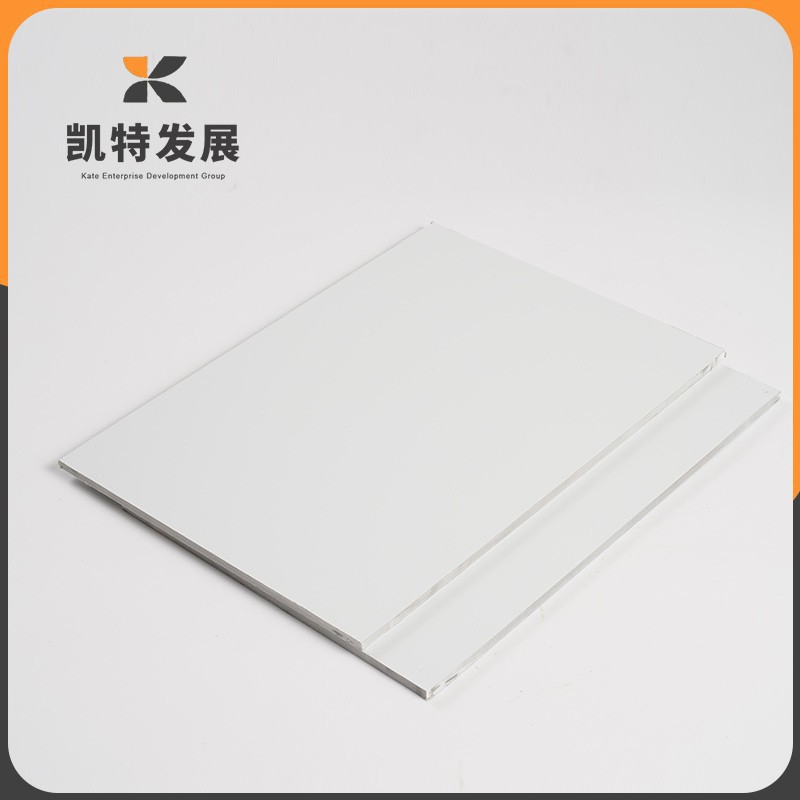

Third, budget constraints are always a factor. Thicker ACPs generally cost more than thinner ones, so a balance needs to be struck between cost and performance.
Applications of Different Thickness ACPs
- 3 - mm ACPs: These are commonly used in interior applications, such as wall cladding, ceiling panels, and furniture. They are lightweight, easy to handle, and cost - effective.
- 4 - mm ACPs: This is a popular choice for both interior and exterior applications. They offer a good balance between strength and cost, and are suitable for medium - sized facade projects and signage.
- 6 - mm ACPs and above: These thicker ACPs are typically used in large - scale exterior facade projects, especially in high - rise buildings. They provide high strength and can span longer distances without excessive deflection. External Fireproof Board with a thickness of 6 mm or more is often used in applications where fire safety and high structural performance are required.
Conclusion
In conclusion, the strength of Aluminum Composite Panels is closely related to their thickness. As the thickness increases, flexural strength, impact strength, and shear strength generally increase. However, other factors, such as the type of aluminum alloy, core material, and manufacturing process, also significantly influence the overall strength of the ACP.
When choosing the thickness of an ACP for your project, it's essential to consider the structural requirements, aesthetic preferences, and budget constraints. Our company, as a leading ACP supplier, can provide you with professional advice and high - quality products to meet your specific needs. If you're interested in learning more about our ACP products or have any questions regarding thickness selection, please don't hesitate to contact us for procurement and further discussions.
References
- Timoshenko, S. P., & Goodier, J. N. (1970). Theory of Elasticity. McGraw - Hill.
- Callister, W. D., & Rethwisch, D. G. (2011). Materials Science and Engineering: An Introduction. Wiley.